
TL;DR:
- Digital platforms automate referral review, insurance verification, and documentation, reducing delays and workload.
- AI, EMR integration, and machine learning improve efficiency, patient matching, and clinical outcomes.
- Successful adoption depends on staff training, organizational commitment, and continuous process optimization.
Patient referrals and admissions remain one of the most operationally complex functions in skilled nursing facilities (SNFs) and rehabilitation centers. Manual intake processes, fragmented communication with hospitals, and slow insurance verification create costly delays that affect bed occupancy, staff morale, and revenue. AI-powered intake systems automate patient referral review, insurance verification, and documentation for SNFs and rehab centers, reducing manual workflows in ways that were simply not possible five years ago. This article explains how these digital platforms work, what measurable gains facilities are achieving, and how your team can adopt them successfully.
Table of Contents
- How digital platforms reshape patient referrals and admissions
- The core technologies: AI, EMR integration, and machine learning explained
- Real-world operational impacts: Benchmarks and measurable gains
- Limitations, pitfalls, and best practices for digital adoption in SNFs
- Strategic recommendations for maximizing digital impact
- Our take: Why adoption is about people, not just platforms
- Ready to optimize referrals? Transform your admissions with proven digital solutions
- Frequently asked questions
Key Takeaways
| Point | Details |
|---|---|
| AI-driven platforms boost speed | Digital solutions halve referral review times and improve bed occupancy rates. |
| Integrated tech is essential | AI, EMR, and insurance data integrations streamline workflows and reduce bottlenecks. |
| Measurable operational gains | Providers see up to 43% higher admissions and better quality benchmarks with effective adoption. |
| Change management matters | Staff training and leadership buy-in are key to overcoming adoption challenges. |
How digital platforms reshape patient referrals and admissions
Digital platforms built for post-acute care settings do far more than digitize paperwork. They restructure the entire referral and admissions workflow by automating the tasks that previously consumed hours of staff time each day.
Core workflows now handled automatically include:
- Referral review and triage: AI algorithms score incoming referrals based on clinical criteria, payer type, and bed availability, so your team reviews only the most viable candidates first.
- Insurance eligibility verification: Real-time connections to payer portals confirm coverage within minutes, not hours.
- Clinical documentation management: Platforms pull structured data from hospital EHR systems using FHIR and HL7 standards, reducing duplicate data entry.
- Communication tracking: Automated alerts notify referral coordinators of pending decisions, reducing dropped referrals.
The operational impact of these automations is well documented. Facilities using AI referral management report referral review times cut 50%, staff burnout reduced by 30%, and bed occupancy improved by 20%. Those are not marginal gains. They translate directly to revenue, staff retention, and patient throughput.
| Metric | Before digital platform | After digital platform |
|---|---|---|
| Referral review time | 60+ minutes per referral | 30 minutes or less |
| Insurance verification | 24 to 48 hours | Under 1 hour |
| Bed fill speed | 7 to 10 days | 4 to 6 days |
| Staff burnout rate | High | Reduced by ~30% |
Understanding the role of AI in patient intake helps administrators set realistic expectations. These platforms do not replace clinical judgment. They remove the friction around it, so your admissions coordinators spend more time on decisions that require expertise and less time on repetitive lookups.
Pro Tip: When evaluating vendors, prioritize platforms with proven EMR integrations and documented implementation timelines. Facilities that go live within 60 days consistently report faster ROI than those with prolonged onboarding cycles. Ask vendors for reference sites in your state.
The shift toward automation in nursing home intake is not a future trend. It is a current competitive reality. Facilities that adopt these tools now are building operational advantages that will be difficult for slower adopters to close.
The core technologies: AI, EMR integration, and machine learning explained
Now that we’ve seen the big-picture benefits, it’s important to understand the core technology components powering these gains.
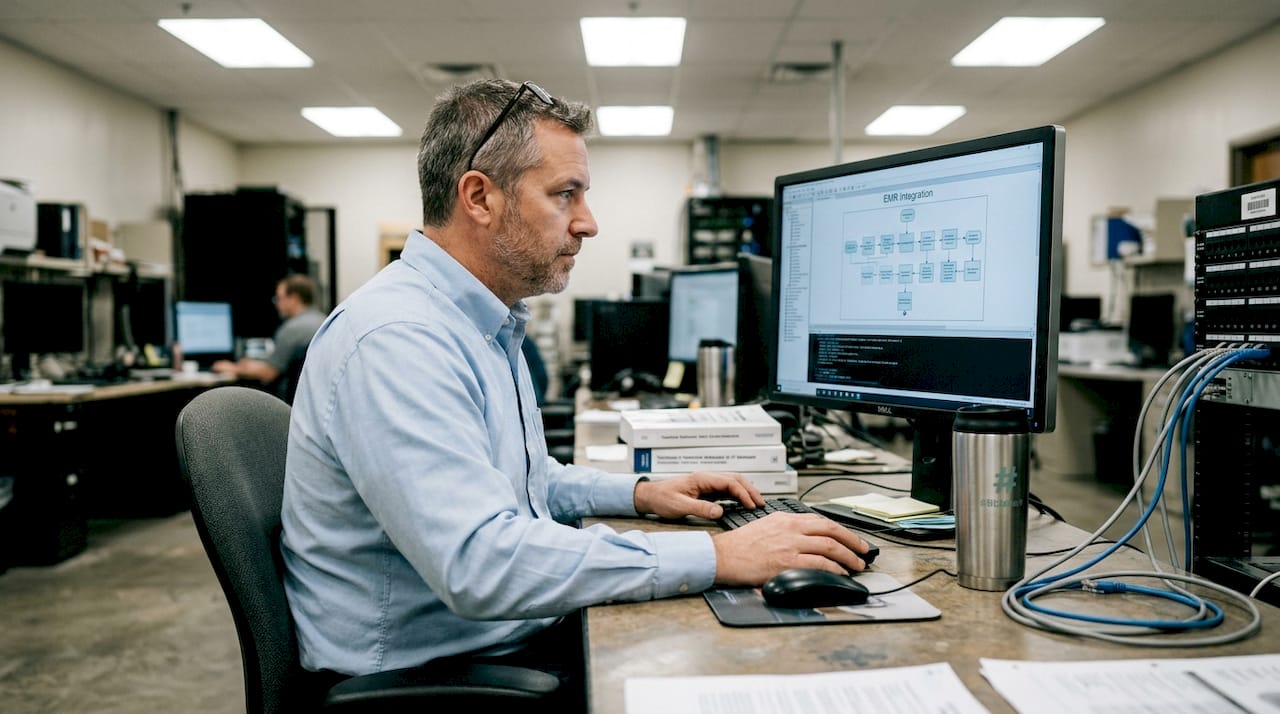
Three technologies form the foundation of modern digital admissions platforms:
1. AI referral scoring
AI algorithms evaluate each incoming referral against your facility’s clinical capabilities, staffing levels, and payer mix. The system assigns a priority score, so your team knows immediately which referrals to accept, which to decline, and which need more clinical review. This eliminates the guesswork that slows manual triage.
2. EMR and insurance integration
Platforms connect directly to hospital EHR systems and payer portals using standardized data protocols. Automated eligibility checks eliminate 30-minute delays per referral and enable beds to be filled 3 to 5 days faster. The intake process optimization this creates reduces the back-and-forth calls that frustrate both hospital discharge planners and your admissions staff.
3. Machine learning for patient-to-facility matching
Machine learning models analyze historical admission outcomes to identify which patient profiles your facility serves most successfully. Over time, the system learns which referrals lead to positive outcomes, shorter lengths of stay, and lower readmission rates. This supports higher-quality admissions, not just higher volume.
Here is a comparison of traditional versus AI-assisted admissions processes:
| Process step | Traditional approach | AI-assisted approach |
|---|---|---|
| Referral triage | Manual review by coordinator | AI scoring with priority ranking |
| Eligibility check | Phone calls to payer | Automated real-time portal query |
| Clinical assessment | Paper fax review | Structured EHR data pull |
| Patient matching | Coordinator judgment only | ML-informed recommendation |
| Decision timeline | 1 to 3 days | Same day to 24 hours |
For administrators looking to implement these tools, a practical step-by-step approach works best:
- Audit your current referral workflow to identify the biggest time delays.
- Map your existing EMR and payer systems to confirm integration compatibility.
- Select a platform with documented referral management capabilities and HIPAA-compliant data handling.
- Run a structured pilot with one referral source before full deployment.
- Measure baseline and post-implementation KPIs at 30, 60, and 90 days.
Research on AI and EHR integration in nursing home settings confirms that facilities combining AI with structured EHR data achieve measurable quality improvements across multiple clinical domains. The technology is mature enough for real-world deployment.
Real-world operational impacts: Benchmarks and measurable gains
Understanding the core technologies makes it easier to appreciate the real, measurable impacts digital platforms create on the ground.
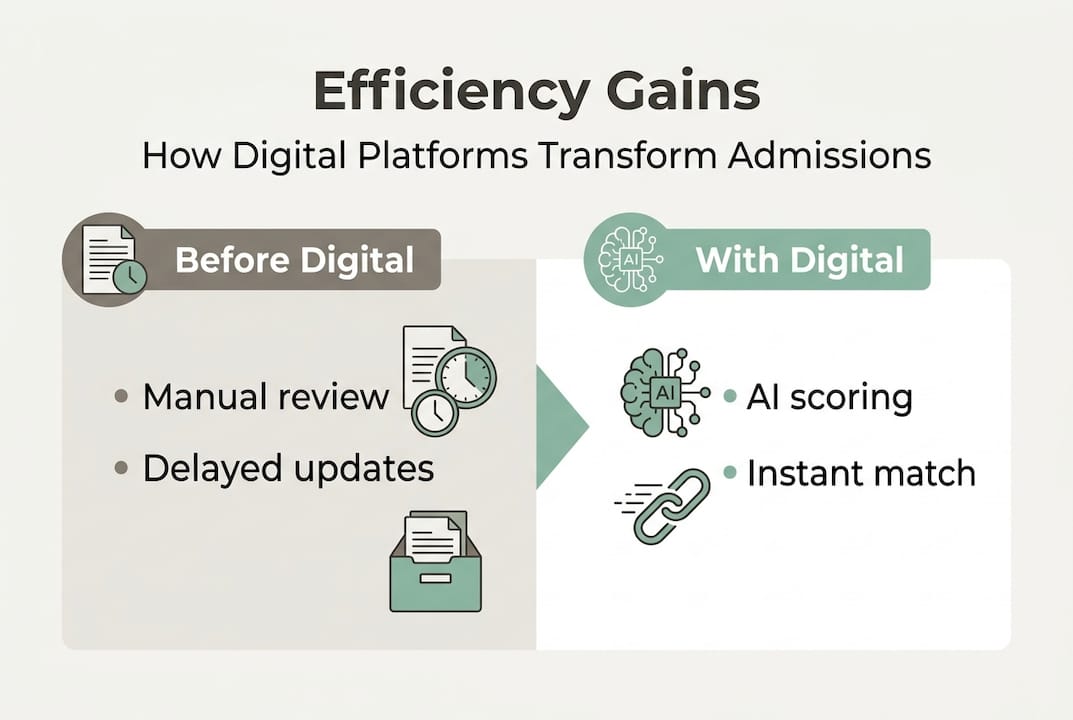
The numbers coming out of SNF settings are significant. SNF admission rates have risen 43% since 2019, with patient acuity increasing 34% over the same period. Facilities are admitting more patients, and those patients are medically complex. Digital platforms are helping teams manage that complexity without proportional increases in administrative staffing.
Key operational benchmarks from facilities using EHR and AI integration:
- Falls reduced by 9% through better pre-admission clinical screening
- Functional decline rates improved by 22% with accurate acuity-matched placements
- EHR and AI tools improve 16 out of 18 CMS quality measures tracked for SNF performance
- Bed occupancy improves within the first 90 days of platform deployment
- Referral network relationships strengthen as hospital discharge planners receive faster, more reliable responses
| KPI | Benchmark improvement |
|---|---|
| Admission rate | +43% since 2019 |
| Patient acuity match | +34% improvement |
| Falls reduction | 9% decrease |
| Functional decline | 22% improvement |
| CMS quality measures | 16 of 18 improved |
These gains are not isolated to large, well-resourced facilities. Smaller SNFs and independent rehab centers that track census and efficiency benchmarks consistently report meaningful improvements after digital adoption, particularly in time to fill beds and referral acceptance rates.
The revenue implications are equally important. Faster bed fill means fewer days of lost revenue per empty bed. Improved acuity matching means higher Medicare and managed care reimbursements. Facilities that focus on streamlining administrative work find that the platform pays for itself within the first year in most cases.
For administrators tracking automation for better efficiency, these benchmarks provide a realistic baseline for setting internal performance targets.
Limitations, pitfalls, and best practices for digital adoption in SNFs
While the upside is impressive, it’s critical to recognize and manage the complexities that come with rolling out these technologies.
Adoption is not automatic, and the risks are real. Up to 80% of clinicians report experiencing slowdowns or feature gaps during digital platform rollouts. The most common barriers include:
- Digital literacy gaps: Many admissions coordinators and clinical staff have limited experience with AI-assisted tools. Training must be structured and ongoing, not a one-time onboarding session.
- Staff resistance: Change is uncomfortable. Staff who feel their expertise is being replaced will disengage. Framing AI as a support tool, not a replacement, is essential.
- Workflow fragmentation: 56% of healthcare leaders cite fragmented technology as their top barrier. Platforms that don’t integrate cleanly with existing EMR systems create more work, not less.
- AI model drift: Machine learning models can degrade over time if not updated with current patient data. Vendors must provide regular model maintenance.
- Vendor lock-in: Proprietary data formats can make it difficult to switch platforms later. Prioritize vendors using open standards.
“The facilities that struggle most with digital adoption are those that treat it as a technology project rather than an organizational change initiative. The platform is only as effective as the team using it.”
For high-acuity cases, AI recommendations should always be reviewed by experienced clinical staff. The risk of over-reliance on automated scoring is real, particularly for patients with complex comorbidities or unusual payer situations.
Best practices for sustainable implementation include combining technology with structured training programs, monitoring outcomes monthly, and maintaining hybrid oversight for complex admissions. Addressing administrative barriers proactively reduces the likelihood of costly rollbacks.
Pro Tip: Pilot your digital platform with one referral source or one unit before facility-wide deployment. Track three to five concrete KPIs from day one. Facilities that define success metrics before go-live make better vendor decisions and course-correct faster.
Strategic recommendations for maximizing digital impact
By understanding obstacles, you can build a strategy that maximizes the value of your digital platform investment.
The following steps give your facility the strongest foundation for successful digital adoption:
- Select vendors with proven integrations. Confirm that the platform connects with your existing EMR, your primary payer portals, and your hospital referral sources. Documented integration timelines matter as much as feature lists.
- Define ROI metrics before signing a contract. Measure ROI using bed days gained, revenue per admission, and staff time saved versus implementation costs. Set 90-day targets.
- Build a structured training program. Assign a platform champion on your admissions team. Schedule recurring training sessions for the first six months. Track staff confidence scores alongside clinical KPIs.
- Integrate feedback loops. Create a monthly review process where admissions staff flag AI recommendations that were inaccurate or unhelpful. Feed this data back to your vendor for model updates.
- Optimize your intake process continuously. Use platform analytics to identify which referral sources produce the best outcomes and where delays still occur. Platforms with built-in reporting make this straightforward.
- Communicate with hospital partners. Faster, more reliable responses improve your facility’s reputation with discharge planners. Track response time as a relationship-building KPI, not just an internal metric.
Facilities that streamline administrative tasks and optimize their intake process systematically outperform those that deploy technology without a supporting operational strategy.
Pro Tip: For complex or high-acuity admissions, hybrid models work best. Let AI handle the initial triage and documentation pull, then route those cases to your most experienced clinical reviewer. This keeps speed high without sacrificing accuracy.
Our take: Why adoption is about people, not just platforms
All of these recommendations point to a deeper truth we’ve seen across dozens of facilities: technology does not transform operations on its own. People do.
The facilities achieving the strongest results are not necessarily those with the most sophisticated platforms. They are the ones where leadership treats digital adoption as an ongoing organizational commitment, not a one-time installation. They invest in training, build feedback mechanisms into their workflows, and update their practices as the data reveals new patterns.
There is also a humility factor that matters. Administrators who approach AI tools with realistic expectations, acknowledging both their power and their limitations, make better decisions than those chasing vendor promises. The best admissions teams we’ve observed use AI to move faster on routine cases and apply their deepest clinical expertise to the exceptions.
Digital platforms are powerful. But the facilities that maximize their value are those that build a culture of continuous learning around them. That is the competitive advantage that technology alone cannot provide.
Ready to optimize referrals? Transform your admissions with proven digital solutions
If you’re ready to take the next step and see digital gains firsthand, the right solutions are within reach. Smart Admissions gives SNFs and rehabilitation centers the tools to automate admissions for better occupancy, reduce manual workload, and make faster, more informed intake decisions.
Our platform is purpose-built for post-acute care settings, with integrations designed for the EMR systems and payer portals your team already uses. Explore our workflow optimization guide for skilled nursing to see how facilities like yours are achieving measurable gains. You can also review referral management system examples to understand which features drive the fastest results. The path to better occupancy and reduced staff burden starts with the right platform.
Frequently asked questions
How do digital platforms improve patient referral speed in SNFs?
AI-powered digital platforms automate referral review and eligibility checks, removing manual delays and cutting review times by up to 50%. Faster triage means your team can respond to hospital discharge planners the same day, improving both occupancy and referral relationships.
What are the biggest barriers to adopting digital platforms in skilled nursing?
The most common barriers are digital literacy gaps among staff, resistance to new workflows, and fragmented technology that doesn’t integrate cleanly with existing systems. Up to 80% of clinicians report slowdowns or feature gaps during rollout, making structured training and phased implementation essential.
Which KPIs matter most when tracking digital admissions impact?
Focus on bed occupancy rate, referral acceptance rate, time to fill beds, staff hours saved per week, and CMS quality measure scores. Facilities using EHR and AI tools have seen admission rates rise 43% and patient acuity improve 34%, providing a strong baseline for your own targets.
Is AI meant to replace clinical staff in admissions?
No. AI handles repetitive tasks like data retrieval and eligibility verification, but skilled human oversight remains essential, particularly for high-acuity or clinically complex cases. Hybrid models that combine AI triage with experienced clinical review consistently produce the best outcomes.