
TL;DR:
- Intake errors lead to significant revenue loss, with many facilities losing up to 30% before claims reach payers.
- Key metrics like denial rate and clean claim rate are essential for improving revenue cycle performance.
- Combining AI automation with trained staff enhances accuracy, reduces denials, and increases collection efficiency.
Intake errors cost $14 to $23 per patient to correct, and a single denied claim can drain $25 to $117 in rework costs alone. When you multiply those figures across hundreds of monthly admissions, the financial impact becomes impossible to ignore. Many healthcare facilities lose up to 30% of revenue before a claim ever reaches the payer, driven by eligibility mismatches, incomplete documentation, and referral workflow gaps. This guide walks your team through the metrics that matter most, the root causes behind revenue leakage, and the practical strategies your facility can act on today to improve collections, reduce denials, and build a more sustainable admissions operation.
Table of Contents
- Understanding key revenue metrics in healthcare facilities
- Root causes of revenue leakage in admissions and intake
- Leveraging automation and AI to improve revenue outcomes
- Best practices to maximize collections and reduce denials
- Our perspective: Why hybrid human-AI teams are the future of revenue optimization
- Next steps: Transform revenue outcomes with Smart Admissions
- Frequently asked questions
Key Takeaways
| Point | Details |
|---|---|
| Track critical metrics | Measuring denial rates, clean claim rates, and A/R days reveals where revenue leaks occur. |
| Fix intake weak spots | Address eligibility and documentation errors at admissions to reduce denials and lost revenue. |
| Adopt AI and automation | Automation solutions can reduce denials, speed intake, and lower operational costs substantially. |
| Standardize best practices | Intake checklists and process training help teams consistently maximize collections and prevent revenue loss. |
| Embrace human-technology teams | A hybrid approach fuses technology’s speed with staff expertise for lasting revenue optimization. |
Understanding key revenue metrics in healthcare facilities
Having set the stage for the vast financial impacts, it is critical you understand which metrics drive revenue in your facility. Without clear benchmarks, your team cannot measure progress or identify where the biggest financial risks exist.
Five metrics form the foundation of any effective revenue cycle management program:
- Denial rate: The percentage of claims rejected by payers on first submission.
- Clean claim rate: The percentage of claims processed without errors or rejections on first pass.
- Days in accounts receivable (A/R): The average number of days it takes to collect payment after a claim is submitted.
- Net collection rate: The percentage of collectible revenue your facility actually recovers.
- Cost to collect: The total administrative expense required to bring in each dollar of revenue.
| Metric | Industry benchmark | What falling short costs you |
|---|---|---|
| Denial rate | Below 5% | Every extra percentage point can equal thousands in monthly write-offs |
| Clean claim rate | 90 to 95% or higher | Lower rates mean more rework, delays, and staff time |
| Days in A/R | 35 to 50 days or fewer | Longer cycles reduce cash flow and strain operations |
| Net collection rate | Above 95% | Each point below benchmark is direct revenue loss |
| Cost to collect | Below 3 to 4% | Higher costs erode margins on every collected dollar |
Top-performing facilities maintain denial rates under 5%, clean claim rates above 90 to 95%, days in A/R under 35 to 50, net collection rates above 95%, and cost to collect below 3 to 4%. If your numbers fall outside these ranges, your admissions process is likely contributing to the gap.
“Tracking revenue metrics is not a finance team responsibility alone. When admissions staff understand how their daily intake decisions affect denial rates and collection timelines, facilities see faster, more consistent improvements.”
Regular tracking matters because it turns abstract revenue problems into specific operational fixes. If your denial rate spikes in a particular month, you can trace it back to a staffing change, a payer policy update, or a documentation gap. Understanding AI’s impact on clean claims can also show your team how technology supports these benchmarks without adding administrative burden.
Root causes of revenue leakage in admissions and intake
Now that you know which metrics matter, let us look at why so many facilities struggle to hit them. Often, the answer comes down to systemic intake errors that compound over time.
The most common sources of revenue leakage at the intake stage include:
- Outdated insurance verification: Patient coverage changes frequently. Relying on information collected days or weeks prior leads to eligibility mismatches and denied claims.
- Manual data entry errors: High-volume admission periods create conditions where small mistakes, a transposed member ID or a missing authorization code, become expensive problems.
- Poor EHR integration: When your Electronic Health Record system does not communicate cleanly with referral management or billing tools, data gaps form and claims fail.
- DRG downgrades from documentation issues: When clinical documentation does not accurately reflect patient acuity, Diagnosis-Related Group (DRG) assignments may be coded at lower severity levels, reducing reimbursement.
- Referral and admissions workflow gaps: Disconnected handoffs between referral sources, admissions staff, and billing teams create delays that affect claim accuracy and timing.
Eligibility issues drive roughly 27% of all denials, and intake rework costs your facility $25 to $117 per claim. What makes this worse is that up to 65% of denied claims are never resubmitted, meaning a large share of that lost revenue is never recovered.
Stat to note: A facility admitting 200 patients per month with even a 15% denial rate and a 65% non-resubmission rate is walking away from a significant portion of its collectible revenue every single month.
Improving AI for intake efficiency is one of the most direct ways to address these root causes at scale. Solutions that automate eligibility checks and flag documentation gaps before submission reduce the frequency of these costly errors. Facilities focused on reducing administrative time in admissions also report lower error rates because staff spend less time on repetitive tasks and more time on accuracy.

Pro Tip: Conduct a monthly denial audit by category. Sorting denials by root cause, eligibility, authorization, coding, or documentation, lets your team prioritize fixes that will have the greatest financial impact.
Leveraging automation and AI to improve revenue outcomes
Addressing intake gaps is essential, but technology adds leverage that transforms revenue outcomes. The difference between manual, partially automated, and fully automated admissions workflows is significant, both in cost and performance.
| Approach | Denial rate impact | Cost to collect | Staff time required |
|—|—|—|
—|
| Manual only | Highest | 5 to 8% or more | Maximum |
| Partial automation | Moderate | 4 to 5% | Reduced |
| Full automation with AI | Lowest | Below 4% | Minimal for routine tasks |
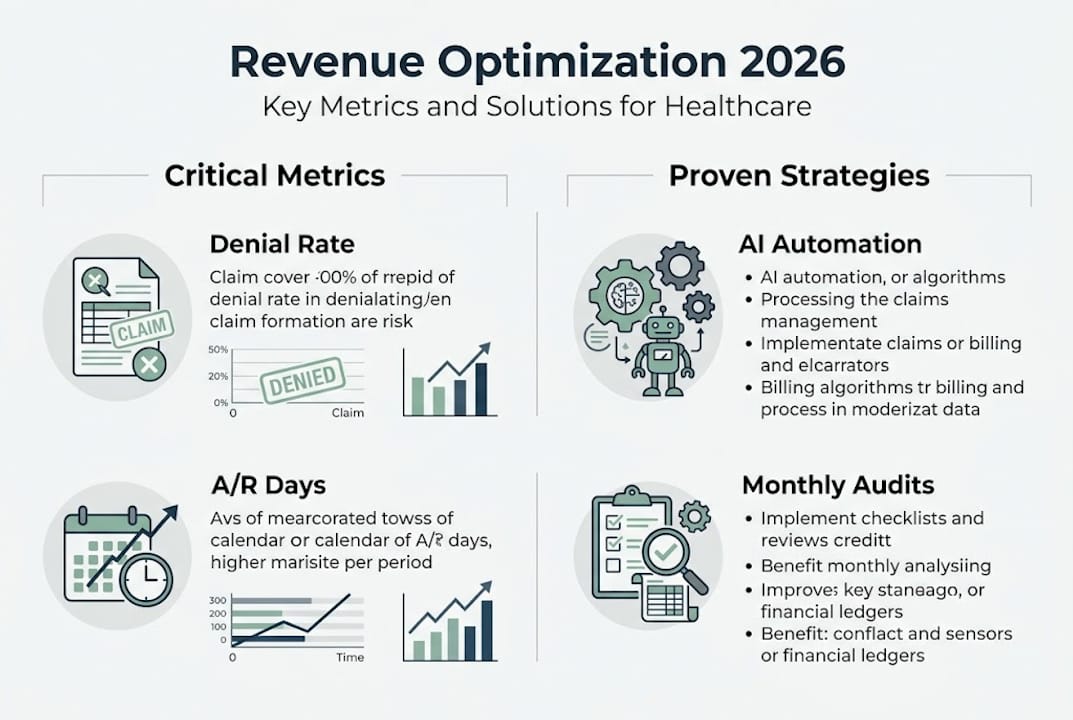
AI can reduce denials by 10 to 40% and improve collections by more than 10%, while automation consistently pushes cost to collect below the 4% benchmark. These are not marginal gains; they represent meaningful shifts in your facility’s financial position.
Here is how to implement automation in stages without disrupting your current workflow:
- Start with eligibility verification: Automate real-time insurance checks at the point of referral acceptance. This single step eliminates the most common denial trigger.
- Automate data entry and claim scrubbing: AI-powered tools can populate patient demographic fields from referral documents and flag errors before submission.
- Integrate compliance checks: Automated systems can verify prior authorization requirements and payer-specific documentation rules before a claim is submitted.
- Add predictive denial alerts: Advanced AI tools analyze historical claim patterns to flag high-risk submissions before they go out, giving your team time to correct them.
- Maintain human oversight for appeals: Nuanced cases, complex payer disputes, and sensitive patient communication still require experienced staff judgment.
Understanding AI and referral streamlining helps your team see where automation fits into your current process without replacing the judgment-based work that defines quality care. The automated workflow benefits for healthcare admissions are well documented, and facilities reviewing administrative automation in 2026 are finding more entry points than ever for practical deployment.
Pro Tip: Do not try to automate everything at once. Start with the highest-volume, most error-prone step in your current admissions process, usually eligibility verification, and build from there.
Best practices to maximize collections and reduce denials
While technology is invaluable, a disciplined process and team buy-in ensure results stick. The facilities with the strongest collection rates combine smart tools with clear operational standards.
Here are the core practices your team should implement:
- Build a standardized intake checklist: Every admission should follow the same verification sequence, covering insurance information, authorization requirements, patient demographics, and clinical documentation. Consistency eliminates the gaps that lead to denials.
- Verify eligibility and benefits before admission, not after: Real-time verification at the referral stage prevents downstream billing problems. Waiting until after admission creates urgency that leads to errors.
- Integrate your EHR with referral management: When patient data flows automatically from referral sources into your EHR and billing system, manual entry errors decrease significantly. Seamless integration also speeds up the documentation process for clinical staff.
- Train staff to resubmit denied claims proactively: Given that 65% of denied claims are never resubmitted, building a structured appeals workflow is one of the fastest ways to recover lost revenue. Assign ownership, set timelines, and track resubmission rates as a performance metric.
- Monitor claim status in real time: Do not wait for remittance to learn a claim was denied. Real-time claim tracking lets your team intervene early, correct issues, and resubmit within payer timelines.
Compliance and documentation accuracy are equally important. Detailed clinical notes that reflect actual patient acuity protect against DRG downgrades and reduce audit risk. Reviewing workflow improvements built into modern platforms can show your team how structured processes and AI-powered assistants support both compliance and collections without adding paperwork.
Pro Tip: Set a weekly collections review meeting with your admissions and billing leads. A 30-minute session focused on denial trends, resubmission status, and eligibility flags can prevent thousands in monthly revenue loss.
Our perspective: Why hybrid human-AI teams are the future of revenue optimization
After working through best practices, it is worth stepping back to consider a broader shift happening in healthcare admissions. The most common assumption facilities make is that AI is a tool you layer on top of existing processes. That framing limits what you can actually achieve.
The facilities we see making the most durable revenue gains are not the ones with the most sophisticated software. They are the ones that have invested equally in staff training and in technology. AI excels at processing high volumes of structured data accurately and quickly. But it cannot negotiate a payer dispute with nuance, recognize when a patient situation requires a different approach, or build the referral partner relationships that keep your beds filled.
Hybrid teams where trained staff use AI tools as decision support rather than as a replacement are consistently outperforming both fully manual and fully automated approaches. Global talent pools, when properly trained and integrated, extend that capacity further without sacrificing care quality. Facilities that build toward truly integrated intake recognize that the goal is not automation for its own sake. It is accuracy, speed, and sustainable revenue at scale. The technology works best when the people using it understand both the clinical and financial stakes of every admission decision.
Next steps: Transform revenue outcomes with Smart Admissions
If you are ready to put these strategies into practice, the right tools and resources are available to support your team every step of the way.
Smart Admissions gives healthcare facilities the AI-powered infrastructure to reduce denials, accelerate collections, and simplify every stage of patient intake. Whether you are looking to understand what referral management means for your operations, follow a step-by-step intake guide built for admissions teams, or quantify the manual verification costs your facility is currently absorbing, Smart Admissions provides practical solutions tailored to skilled nursing and post-acute care providers. Start improving your revenue outcomes today.
Frequently asked questions
What are the most important revenue metrics for healthcare facility admissions?
Critical metrics include denial rate, clean claim rate, days in accounts receivable (A/R), net collection rate, and cost to collect. Top performers maintain denial rates under 5%, clean claim rates above 90 to 95%, and net collection rates above 95%.
How does automation or AI help reduce denied claims in admissions?
AI and automation can cut denial rates by 10 to 40% by improving data accuracy, speeding up eligibility verification, and identifying errors before claims are submitted, while also pushing cost to collect below 4%.
What causes most patient intake-related revenue leakage?
Eligibility verification errors, incomplete documentation, and failure to resubmit denied claims are the leading causes. Eligibility issues alone account for roughly 27% of denials, and up to 65% of those denied claims are never resubmitted.
Can facilities improve revenue without replacing their staff?
Yes. Blending automation with human expertise lets facilities optimize revenue while building on existing staff strengths. Integrating AI for prediction and prevention alongside trained staff produces the most consistent and sustainable revenue improvements.